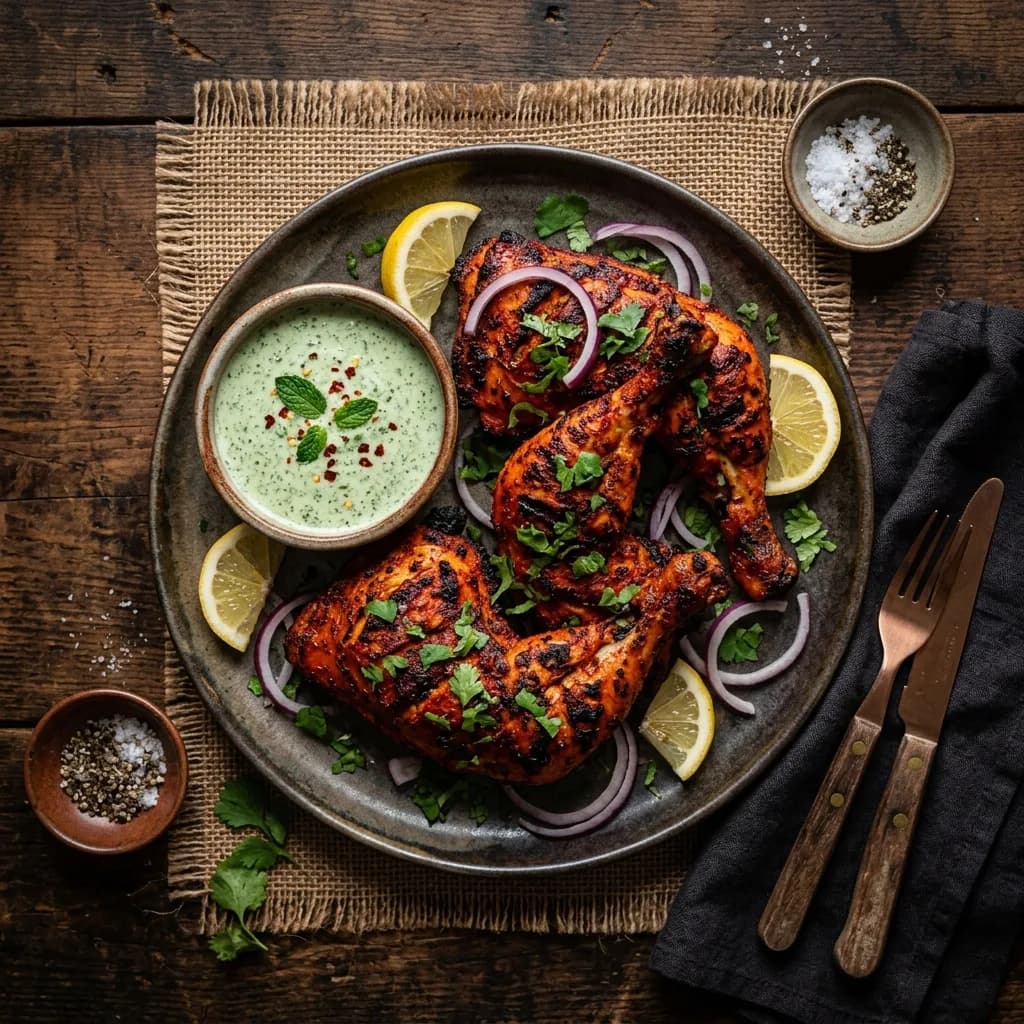
Tandoori ChickenKetoGluten-FreeLow-CarbMuscle MaintenanceAnti-InflammatoryGut Healthnon-vegdinner
Best Tandoori Chicken
30 mins
Learn how to make restaurant-style tandoori chicken at home with a two-step marinade, thick yogurt, mustard oil, and a homemade spice blend — no artificial colours, just real flavour.
Welcome to my kitchen, my friends! Stewart Lucas here. Today, we are taking a journey into the heart of classic Indian culinary arts. Tandoori chicken is more than just a dish—it is an experience, a legacy born from the traditional clay oven called a tandoor. Historically, this clay oven would reach blisteringly hot temperatures, roasting marinated meats quickly to lock in moisture while imparting a signature charcoal smokiness and a charred, crimson exterior.
But how do we capture that restaurant quality at home without a tandoor in our backyard? The secret does not lie in red food coloring, which many restaurants use. Instead, it lies in the art of the marinade. By utilizing a traditional two-step marination process and leveraging the natural heat of your home oven or air fryer, you can achieve tender, juicy chicken with beautiful charred edges that sing with deep, smoky spice notes.
In this recipe, we will explore the science of acid-based tenderization, the importance of thick yogurt, and the rustic magic of raw mustard oil. Together, we will elevate simple ingredients into a dish that is deeply nourishing and undeniably satisfying. Let us begin.
Stewart's Nutrition Breakdown
From a metabolic perspective, tandoori chicken is a nutritional goldmine. High-quality protein from chicken thighs or drumsticks supports muscle protein synthesis and promotes long-lasting satiety, making it an excellent anchor for clean eating or low-carb lifestyles.
The yogurt marinade serves a dual purpose. Beyond acting as a gentle tenderizer due to its lactic acid content, it provides probiotics that support a healthy gut microbiome. Additionally, our spice blend is packed with anti-inflammatory compounds. Turmeric contains curcumin, a potent antioxidant, while ginger and garlic aid digestion and boost cardiovascular health. By cooking at home, we avoid industrial seed oils and artificial colors, keeping the meal clean, gluten-free, and keto-friendly.
Here is your culinary palette. We divide our prep into two distinct phases to ensure the spices penetrate all the way to the bone.
First Marinade
Second Yogurt Marinade
Follow these steps closely. The two-step marination is non-negotiable for achieving the ultimate texture and depth.
Professional Coaching Insights
To truly achieve that authentic flavor, follow these professional secrets:
This dish is exceptionally friendly for meal prepping and batch cooking.
Refrigeration: Store leftover cooked chicken in an airtight container for up to 4 days. To reheat, place the chicken in a preheated oven or toaster oven at 350°F (175°C) for 10 minutes, or air-fry at 360°F (180°C) for 4 to 5 minutes. Avoid the microwave if you want to preserve the crisp, roasted texture.
Freezing: You can freeze the chicken after the second marination before cooking! Place the marinated raw chicken in a freezer-safe zip bag and freeze for up to 3 months. Thaw in the refrigerator overnight before baking as directed.
Embrace flexibility and adapt the recipe to suit your dietary preferences:
Substitute chicken with firm paneer cubes or extra firm pressed tofu. Reduce the marination time to 1 hour and bake for only 15 to 20 minutes.
You can use boneless chicken breast or thigh chunks. Thread them onto skewers to make Tandoori Tikka, and roast for 15 to 18 minutes.
Swap Greek yogurt for a thick, unsweetened coconut yogurt. Add a teaspoon of lemon juice to mimic the natural tang of dairy yogurt.
If mustard oil is unavailable, you can substitute it with avocado oil or neutral vegetable oil mixed with a tiny drop of sesame oil.
No, you do not. A home oven preheated to a high temperature (425°F) combined with a final broiling step replicates the dry, intense heat and char of a tandoor remarkably well. An air fryer is also an excellent option.
I highly recommend you do not. The first marination allows the lemon juice and salt to penetrate the fibers first. This helps tenderize the chicken deeply, ensuring the second marination's spices cling to flavorful, seasoned meat.
Mustard oil is widely used as a culinary cooking fat in South Asia. If you are concerned about its pungency, you can heat it to smoking point and let it cool before adding to the marinade, though raw oil provides the most authentic flavor profile.
Using bone-in chicken thighs and drumsticks is the best insurance against dry meat, as they contain enough healthy fat and connective tissue to stay juicy. Additionally, do not overcook past an internal temperature of 165°F.
Learn how to make restaurant-style tandoori chicken at home with a two-step marinade, thick yogurt, mustard oil, and a homemade spice blend — no artificial colours, just real flavour.
Prep the Chicken: Make deep diagonal cuts on the thickest parts of the chicken legs. This allows the marinade to penetrate deep into the meat rather than just sitting on the surface. Pat the chicken completely dry with paper towels.
The First Marinade: Rub the chicken with the lemon juice, Kashmiri red chili powder, and sea salt. Let it rest at room temperature for 15 to 20 minutes. This acid bath begins the tenderization process and infuses the base seasoning.
Prepare the Yogurt Marinade: In a separate bowl, whisk together the hung curd, raw mustard oil, ginger paste, garlic paste, Kashmiri red chili powder, turmeric, garam masala, and crushed Kasuri Methi. It should form a thick, aromatic paste.
The Second Marinade: Coat the chicken thoroughly with the yogurt paste, massaging it into the cuts. Cover and refrigerate for at least 4 hours, or ideally overnight (up to 24 hours). The longer it rests, the more tender it becomes.
Roast to Perfection: Preheat your oven to 425°F (220°C). Place a wire rack over a foil-lined baking sheet. Arrange the marinated chicken on the rack, leaving space between pieces. Roast for 25 to 30 minutes, turning once halfway through.
The Broiler Char: Switch the oven to broil for the final 3 to 4 minutes. Watch closely as the yogurt marinade chars beautifully, creating those authentic rustic tandoor-style dark spots. Ensure the internal temperature reaches 165°F (74°C).
Rest and Garnish: Let the chicken rest for 5 minutes to lock in juices. Garnish with a pinch of chaat masala, sliced red onions, and fresh lemon wedges before serving.
Let us know how it turned out! Click a star below to leave a review and rate the recipe.
Tag @stewartlucas on Instagram and hashtag it #nutriguide!


Stewart Lucas is the founder of NutriGuide. With over a decade of clinical experience in nutrition, hormone balance, and dietetic consulting, Stewart simplifies home cooking with science-backed diet plans, healthy ingredient hacks, and easy culinary techniques.
Please log in to leave a review.